Travelling Sumatra during Ramadan or Idul Fitri often raises a lot of questions for visitors. Will restaurants be open? Is it rude to eat or drink during the day? And will Ramadan or Lebaran affect transport, tours, or accommodation?
The short answer is that travelling Sumatra during Ramadan is generally very manageable for tourists, with only minor day-to-day adjustments, while Idul Fitri (Lebaran) can significantly affect transport, prices, and availability.
Having lived and travelled in Sumatra for many years, we’ve experienced both periods from a local and traveller perspective. In this guide, we’ll explain what to expect and how to plan ahead so you can travel respectfully and confidently.
Contents
What is Ramadan and Why is it Relevant for Travellers to Sumatra?
Ramadan is one of the holiest months of the year for Muslims, so it makes sense that in a country with the highest Muslim population in the world, Ramadan in Indonesia is kind of a big deal!
Ramadan is a 29-30 day period of fasting and spiritual growth that takes place in the 9th month of the Islamic lunar calendar – commemorating the revelation of the Qur’an to the Prophet Muhammad.
This lunar calendar is 10 days shorter than the 365-day calendar we all know so well, which means the dates for Ramadan shift every year – more info on that in the next section.
During Ramadan, the majority of Muslim people will commit to fasting from sunrise to sunset – refraining from eating or drinking anything (yes, that includes water)! There are exceptions, of course. Young children, elderly folk, those who are ill, and women on their period are exempt from fasting.
If you happen to be travelling Sumatra (or elsewhere in Indonesia) during Ramadan, you will notice some changes to daily routines.

People get up much earlier than usual, and fewer restaurants and warung (small coffee shops) open during the day (depending on where you are). More people gather at mosques, and groups of people gather together at sunset to break their fasts.
If you’re a culturally conscious traveller, it’s always nice to know what’s going on and why, so you can interact with people respectfully and learn a little about another culture.
Additionally, at the end of Ramadan, there’s a massive, nation-wide celebration called Idul Fitri that definitely can impact your travel plans! It’s super important to be aware of the dates for Idul Fitri and adjust your plans accordingly. We’ll cover this further on in the blog.
For anyone travelling Indonesia during Ramadan, a little cultural awareness goes a long way and helps you travel more smoothly.
For more info on Indonesian public holidays and how to time your trip to Sumatra, check out our Best Time to Visit Sumatra page.
When is Ramadan in Sumatra, Indonesia?
In 2026, Ramadan is set to begin on the evening of Wednesday, 18 February, and end at sunset on Thursday, 19 March.
That means that in 2027, it will start around February 7th; January 27th in 2028, and so on.
As we mentioned earlier, Ramadan happens in the 9th month of the Islamic calendar, which is 354 days long. This explains why the dates move by 11 days every year, getting earlier year on year.
On top of these variations, Ramadan must start and end on a new moon, so that also impacts the exact date.
The start of Ramadan in Indonesia is decided and announced by the Ministry of Religious Affairs.
Sometimes, these dates can differ slightly from other parts of the world, due to the different methods used to calculate the exact beginning.
What Happens During Ramadan in Sumatra?
Daily life for travellers to Sumatra doesn’t drastically change during Ramadan, but daily rhythms for the locals can be quite different.
Because fasting begins at sunrise, people wake up early every day to eat a pre-dawn meal known as suhoor, suhur or sahur.
In the evenings, after sunset, the fast is broken with a meal called iftar. Iftar is often a group occasion: families and friends gather to eat together. In some areas, food stalls will be set up on the streets, creating a festive atmosphere during iftar time.
Ramadan isn’t just about not eating and drinking: it is also a time for self-reflection, a focus on spirituality, and keeping the mind and body pure. Many Muslims also refrain from smoking, gossiping, lying, and physical intimacy.
There’s a focus on reading the Qur’an and attending mosque for prayers – particularly in the evenings, when there is a special Ramadan prayer called Taraweeh or Tarawih

Fasting from food and water in the tropical heat does take a toll, so many businesses may have reduced opening hours or take longer breaks to allow their employees to pray and rest.
Be prepared for some places to have shortened opening hours, including government offices and banks.
Be aware that some businesses may open later in the day, close in the middle of the day, or operate with fewer staff.
Planning a trip to north sumatra?
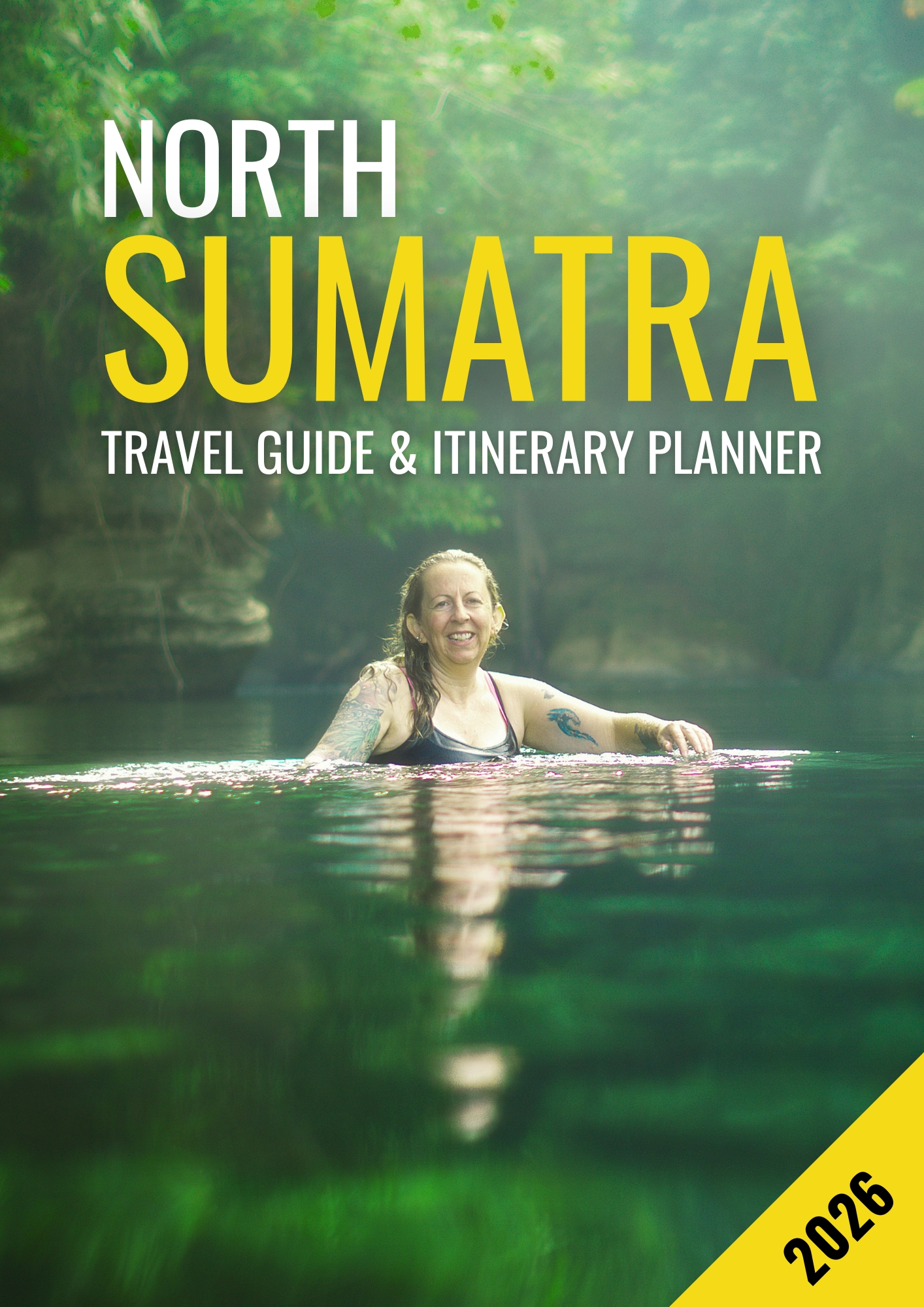
Our eBook has Everything You Need!
- 140 pages of up-to-date, detailed travel advice
- Destination guides for 7 must-visit places (plus hidden gems)
- Exactly how to get there, what to do, where to stay, and where to eat
- Done-for-you itineraries for 1 week, 10 days, and 2 weeks
- Essential travel info: SIM cards, budgeting, safety, health & visas
- Plus insider travel resources and local advice
Travelling Sumatra During Ramadan – What Tourists Need to Know Before You Go
Ramadan in Sumatra doesn’t affect every region in the same way, so experiences can vary widely depending on where you travel.
Indonesia is the largest Muslim-majority country in the world, and Sumatra island is also predominantly Muslim – but it’s a big island, and different areas will be affected differently.
For example, Samosir Island and Lake Toba are Christian-majority regions. Here, life goes on pretty much as normal. You may notice that Muslim restaurants are shut during the day, but life doesn’t change dramatically here for non-Muslims.
In areas like Aceh and parts of West Sumatra, things are likely to be a bit more restricted. It might be harder to find open restaurants during the day, and there is a bigger emphasis on prayer, quiet afternoons, and mosque attendance.
On that note, if you’re sensitive to noise, it’s a good idea to check how close your accommodation is to any mosques. The daily call to prayer is broadcast regularly year-round, but it can be lengthier and more pronounced during Ramadan.
What’s important for travellers to Sumatra to know about Ramadan is that religious tolerance is very real throughout Sumatra. Christians, Muslims, Hindus, Buddhists, and other religions live together side by side in many places. For the most part, people respect each other’s customs and beliefs.
Foreign tourists are not expected to follow any of the Ramadan requirements. Locals are extremely tolerant and understanding. But it is still important to be considerate and respectful when visiting a Muslim-majority country during the holy month.
Beyond that, it can be a beautiful thing to join in and experience Ramadan as the Muslim locals do. Stay at a homestay, join the family for their morning sahur, learn about their beliefs and practices, and join for the great vibes of “buka puasa” at sunset.
What better way to understand and appreciate another culture than experience it for yourself?

Can Tourists Eat and Drink in Sumatra During Ramadan?
One of the most common questions we are asked is: can tourists eat during Ramadan in Indonesia?
The short answer is yes. You can still find food and drink during Ramadan, and it’s totally fine for tourists to eat and drink as normal. You will always be able to find food, but sometimes the availability may depend on where you are.
In tourist areas in North Sumatra, such as Bukit Lawang, Batu Katak, Tangkahan, Berastagi, and Lake Toba, there will always be a variety of restaurants open during the day to cater to foreign tourists.
For the inside scoopson Lake Toba’s best eats, check out our page: Best Restaurants in Tuktuk
Outside of tourist areas, there are always Indomaret and Alfamart convenience stores full of snacks. If you’re on the road and a bit off the beaten track, you may have to respectfully ask around.
Sometimes, restaurants are open, but with screens placed over the windows and doors to allow customers to eat in private out of respect for those fasting.
Is it Rude for me to Eat or Drink in Front of People who are Fasting?

Honestly, it depends on the situation! Most people are totally understanding and won’t be bothered if you are indulging in front of them. In tourist areas, you’ll likely find many restaurant owners who are fasting yet still cooking for guests, and happy to do so.
If you’re in a particularly strict area, it may be a polite idea to eat discreetly, out of sight of the general population, out of respect.
If you’re on a trek or in a car, we always think it’s nice to just have a conversation with your guides or drivers. Ask them if they’re fasting, acknowledge that you’re aware of Ramadan, and just ask if they mind if you have a bite to eat or a drink.
Indonesians are super polite and friendly, so it’s highly unlikely you’d ever find anyone who has a problem with it.
Will Tour Operators, Guides, and Drivers Still be Working During Ramadan in Sumatra?
In general, yes – the people helping you with your Sumatra trip will be working as usual. I remember being surprised when I first travelled solo in Sumatra during Ramadan many years ago that my jungle guides were still doing multi-day jungle treks even while refraining from drinking water!
There are no specific rules about working or not working, so it’s up to your guides and drivers to determine what they feel they can and can’t do during this time. Some may prefer shorter days, earlier finishes or job sharing with others, so they can take turns resting.
Indonesian people are particularly resilient, and the physical fitness of jungle guides is next level! But remember to be mindful of the extra effort on their bodies during this month, and be understanding and patient if they seem tired or a bit low energy at times.
A slightly more generous tip for those working during Ramadan in Sumatra is also a lovely idea, to acknowledge their extra hard work.
Ramadan Travel Tips Indonesia - Cultural Etiquette for Travellers During Ramadan in Sumatra
These simple Ramadan travel tips for Indonesia will help you avoid awkward situations and show respect while travelling.
- Dress modestly (cover shoulders and knees) in general, particularly in areas like Aceh and West Sumatra. Things are a little more relaxed around tourist areas like Tuktuk (Lake Toba) and Bukit Lawang. Travelling in between destinations or in towns and cities, a sarong across the shoulders is always a good option.
- Be discreet when eating, drinking or smoking in public (depending on where you are).
- Be discreet when drinking alcohol unless in more relaxed areas.
- Be patient – understand that your schedule needs to be more flexible and things may take a little longer.
- Consider tipping generously for those who are fasting but still serving food/helping you as you travel.
- Learn phrases like “Ramadan Mubarak” (Blessed Ramadan) or “Ramadan Kareem” (Generous Ramadan) and greet people with them to show respect.

Planning Your Trip to North Sumatra
Sumatra is a huge island, and while travelling here is always an unforgettable adventure, planning a route isn’t always straightforward. Distances can be long, transport options confusing, and timing really matters – especially around busy periods and public holidays.
What works well in one part of North Sumatra can be impractical in another, and that’s not always obvious until you’re on the ground.
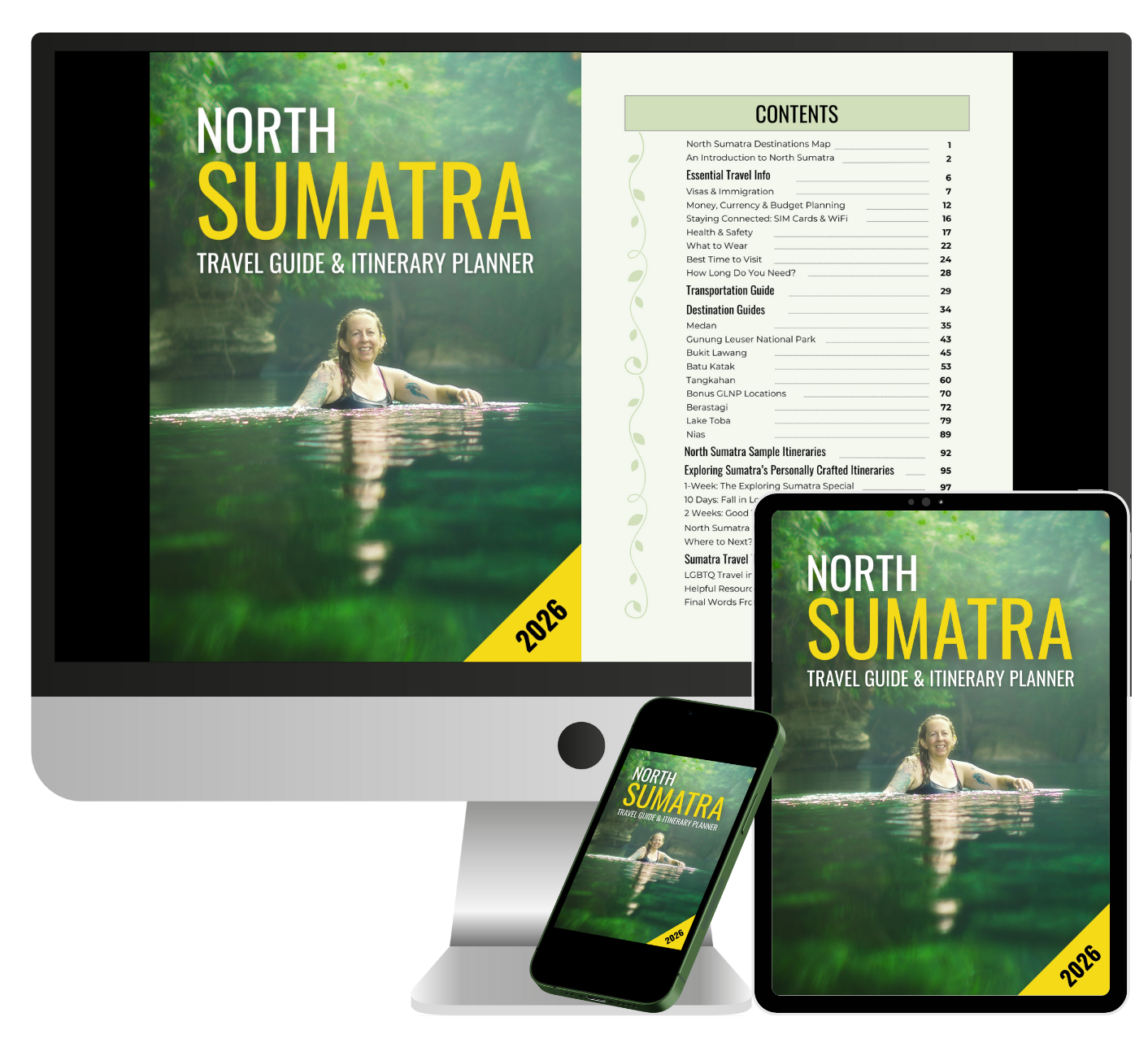
That’s why we created our eBook: the North Sumatra Travel Guide & Itinerary Planner — an in-depth practical planning resource based on more than a decade of living and travelling here.
It’s designed to help you build a realistic itinerary, understand travel times and logistics, and avoid common mistakes, so you can spend less time figuring things out and more time enjoying Sumatra.

Travelling Sumatra During Idul Fitri (Lebaran)
Overall, Ramadan won’t heavily impact non-Muslim tourists as they travel around Sumatra. However, the celebrations at the end of Ramadan most likely will!
Idul Fitri travel in Sumatra is very different from travelling during Ramadan itself, and this is where most disruptions happen.
At the end of Ramadan, Muslims celebrate their biggest holiday of the year – Idul Fitri, also known as Eid, or Eid ul-Fitr. Locally, the holiday period of Eid is referred to as Lebaran.
Idul Fitri is traditionally the time for Mudik (homecoming). Across Indonesia, around 150-200 million people will travel during this week. The majority are destined for Java, but Sumatra is the second largest contributor to this mass movement.

When is Idul Fitri in Sumatra?
In 2026, Idul Fitri falls on Saturday, 21st March. However, the Lebaran public holiday begins on Friday, 20th March.
Mon 23rd and Tuesday 24th of March are also official public holidays.
In 2027, Lebaran starts around March 10th. In 2028, around February 26th.
It’s important to know that many government offices, including immigration, will be shut for the entire week of Lebaran. If your visa needs to be renewed during that week, make sure you visit the immigration office well before, or you will be stuck!
Speaking of visas, if you need some info on applying for your Indonesia visa, check out this useful blog: Sumatra Indonesia Tourist Visa – What You Need to Know.
What Happens During Idul Fitri in Indonesia?

The period of Lebaran travel in Indonesia is one of the biggest mass migrations in the world. Basically, millions of people travel home to spend time with their families.
Idul Fitri is the “Festival of Breaking the Fast.” Traditionally, it involves special morning prayers, acts of charity (zakat), exchanging gifts and money, and visiting family and friends.
It’s about showing gratitude to Allah for providing strength throughout Ramadan, and a time for reconnecting with loved ones.
How Does Idul Fitri Impact Travellers to Sumatra?
With millions of people moving around Sumatra, it’s difficult not to be affected by Idul Fitri if you’re here during that time.
Flights get booked up well in advance, and flight prices for the holiday period rise drastically.
Hotels and accommodations in many areas also fill up very quickly and may be more expensive. In popular areas like Lake Toba or Bukit Lawang, the majority of guesthouses, hotels and homestays can be fully booked out.

Possibly the biggest impact is the insane traffic. We’ve seen enormous traffic jams between Medan, Berastagi, and Lake Toba in previous years – we’re talking many hours of crawling through insane traffic jams!
Here in Toba, the queue to get on the car ferries can literally take a whole day! Popular tourist areas may also be very crowded.
Want to know the best way to reach Lake Toba? Read How to Get to Lake Toba for in-depth advice.
Many businesses will be closed during Lebaran in Sumatra, and some tour operators, guides or drivers may be unavailable for a few days as they also enjoy the holiday.
Should I Travel to Sumatra During Idul Fitri?
If your travel dates have a bit of flexibility, we recommend avoiding travel around Idul Fitri. While it is still possible, it can impact your Sumatra travel plans quite a bit, and definitely affects travel times, prices, availability, and the way you experience Sumatra.
If you’ve already booked travel and will be in Sumatra during Lebaran, don’t panic! Just ensure you’ve locked in your accommodations and drivers ahead of time if possible. See if you can switch your itinerary so you avoid big travel days right at the beginning and end of the holiday.
Travelling in Sumatra during Idul Fitri can still be an amazing experience – people are in relaxed holiday mode, there’s a real festive mood in the air, and you can be a part of this awesome holiday vibe.
Our best advice if you’re in Sumatra during Idul Fitri is to stay in one place for a little bit. Trekking into the jungle is a great way to avoid the busyness, as most locals will be celebrating elsewhere!
So, Is Ramadan a Good Time to Travel in Sumatra?

Travelling Sumatra during Ramadan is more straightforward than many people expect. Day-to-day travel continues much as normal, the local people are as warm and welcoming as ever, and for culturally curious travellers, it can be a really interesting time to be here.
With a bit of awareness and flexibility, Ramadan itself doesn’t need to be something you avoid.
Idul Fitri, on the other hand, is where planning really matters. If you understand the dates, book transport and accommodation early, and adjust your itinerary to avoid major travel days, you can still have a great experience in Sumatra during this period, too. Like most things here, a little local knowledge goes a long way.